Mail Me
Hello, adventure seekers! My name is Decky, and I’m your friendly tour guide. Java travel blog is a personal journey through one of Indonesia’s most fascinating islands. For as long as I can remember, I’ve been exploring the enchanting island of Java, Bali, Borneo, Lombok and Sumatra. Java travel blog will focus and telling story about Java island, and I’m here to share my passion with you. Java, with its rich history, diverse cultures, and stunning natural beauty, offers something for everyone. Whether you’re a history buff, a nature lover, or a foodie, Java has it all. Join me as we embark on a journey through this incredible island.
Imagine yourself standing at the edge of a volcanic crater, the sunrise painting the sky in hues of orange and pink. Or perhaps you’re exploring ancient temples, marveling at the intricate carvings that have stood the test of time. Welcome to Java, Indonesia’s most populous island, a land of stunning natural beauty, rich cultural heritage, and warm hospitality.
Java, the heart of Indonesia, offers a diverse range of experiences for every traveler. From bustling cities to serene villages, from towering volcanoes to pristine beaches, this island has something to offer everyone.
Java Travel Blog at Yogyakarta
My journeys often begin in Yogyakarta, the cultural heart of Java. The city is a treasure trove of ancient temples, such as Borobudur and Prambanan. That provide a glimpse into the island’s Hindu-Buddhist past. I love sharing the stories behind these magnificent structures with my guests, and seeing their faces light up as they marvel at the intricate carvings and vast scale of these monuments. Java Temple Tour is super tour packages that can be explored on the Java Island.
As a tour guide in Yogyakarta, I’ve had the privilege of introducing countless travelers from all corners of the globe to the enchanting beauty of this ancient city. Each group I’ve led has brought a unique perspective and energy to our adventures, and I’ve learned just as much from them as they have from me.
One particular group stands out in my memory, and I write on java travel blog. They were a diverse bunch, hailing from countries as far-flung as Nedherland, Japan, and Australia. Despite their different backgrounds, they shared a common curiosity about Indonesian culture.
A Tale of Temples and Tourists

Java travel blog had the pleasure of guiding with a group of tourist. Our journey began at the magnificent Prambanan temple complex. Java Temple Trip is superior tour packages that can be explored on the Island of java Indonesia. As we wandered through the intricate carvings and towering structures, I could see the awe in their eyes. The Japanese tourists were fascinated by the intricate details of the Hindu mythology depicted in the reliefs, while the nedherland travelers were captivated by the serenity of the temple grounds.
Next, we ventured to the bustling markets of Yogyakarta. The cacophony of sounds and the vibrant colors of the stalls provided a sensory overload for my guests. The Australians were particularly excited to try the local street food, while the Europeans were more interested in finding unique souvenirs.
As we continued our exploration, I learned that each of my travelers had their own reasons for visiting Yogyakarta. Some were seeking spiritual enlightenment, others were simply curious about a different culture, and still others were looking for an adventure. But they all had one thing in common a desire to connect with the people and the place.
It was in these moments in java travel blog of shared experience that I realized the true value of being a tour guide. It’s not just about showing people the sights, but about creating lasting memories and fostering cross-cultural understanding. And as I continue to lead tours in Yogyakarta, I am grateful for the opportunity to connect with people from all over the world.
Bicycle Tour in The Countryside
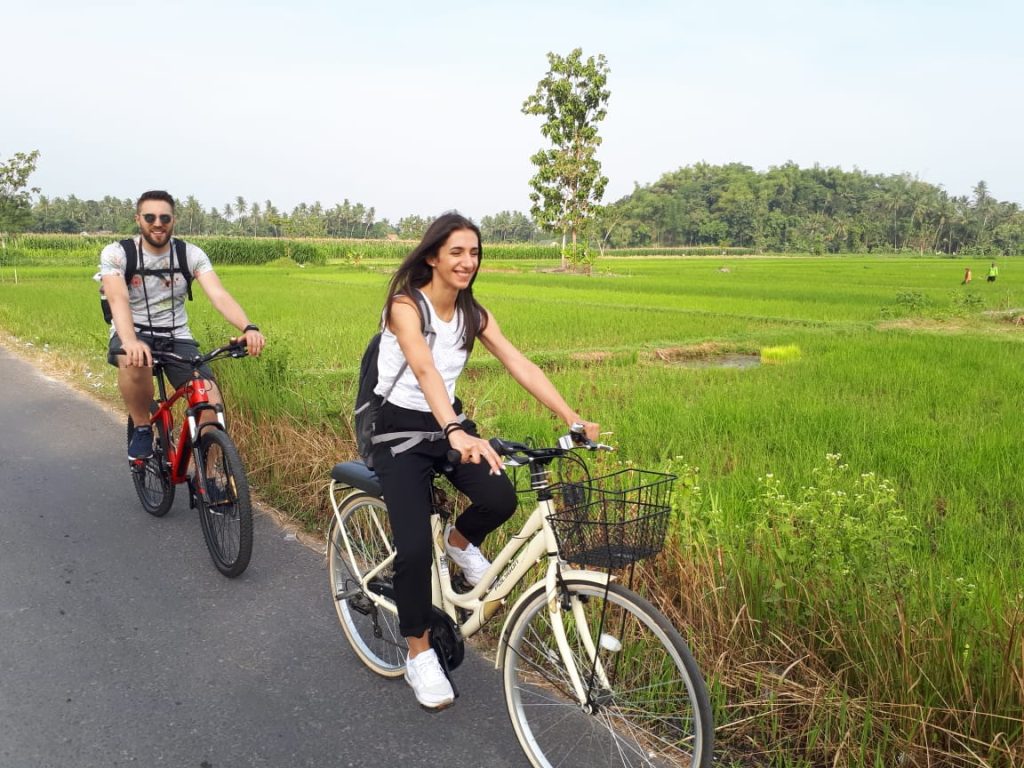
Today, I would be guiding a couple of intrepid cyclists through the charming village of Gilangharjo in Bantul, Indonesia. Our mission? To immerse ourselves in the heart of the village and witness firsthand the traditional crafts that have been passed down through generations.
Our journey began with a leisurely ride through the lush rice paddies. As we pedaled along, I couldn’t help but feel a sense of tranquility wash over me. The villagers greeted us with warm smiles and friendly waves, making us feel instantly at home. Our first stop was a small tofu factory. The owner, a wizened old man with calloused hands, welcomed us into his humble abode. As he demonstrated the intricate process of making tofu, from soaking the soybeans to pressing the curds, I was amazed by the simplicity and efficiency of his methods. The rich, nutty aroma of the freshly made tofu filled the air, tantalizing our taste buds.
Next, we visited a blacksmith’s workshop. The intense heat of the forge was almost palpable as the blacksmith skillfully shaped molten iron into intricate tools and household items. The rhythmic clang of the hammer against the anvil provided a hypnotic soundtrack to our visit. I was particularly fascinated by the intricate carvings on some of the tools. A testament to the artisans’ skill and creativity.
Culinary Adventure with Java Travel Blog

Our culinary adventure continued at a tempe making facility. Here, we learned how soybeans are fermented to create this nutritious and versatile food. The process involved a delicate balance of temperature and humidity. And the owner explained how even the slightest variation could affect the final product.
Our final stop was a small abon factory. As we watched the women carefully shred the meat and season it with a blend of spices, I realized that the production of abon was a labor-intensive process that required patience and precision. The tantalizing aroma of the simmering meat filled the air, making our mouths water.
As our tour came to a close, I couldn’t help but feel grateful for the opportunity to have experienced such a unique and authentic cultural exchange. The villagers of Gilangharjo had opened their hearts and homes to us, sharing their traditions and their passion for their craft. I knew that this was an experience that I would cherish for years to come. As a closing to this bike tour, java travel blog drink fresh young coconut water that we had climbed straight from the tree.
A Day of Sand with Java Travel Blog

Java travel blog had the pleasure of guiding a European family on a tour of our beautiful coastal region. The parents were eager to explore the local culture and cuisine, but it was their young son, Max and Joe who really stole the show. From the moment we arrived at the sand dunes, Max’s eyes lit up with excitement. He couldn’t wait to try sandboarding.
As I helped Max get fitted with his board, I could tell he was a natural. With a few tips and a big push, he was off and sliding down the sandy slopes. His laughter echoed through the dunes as he tumbled and turned. It was heartwarming to see a child so happy and carefree.
Throughout the day, Max and Joe would often race ahead of his parents, eager to show them the next exciting spot. By the end of the day, he was exhausted but happy, his face covered in sand and his heart full of adventure.
Fajar and The Sea Turtle
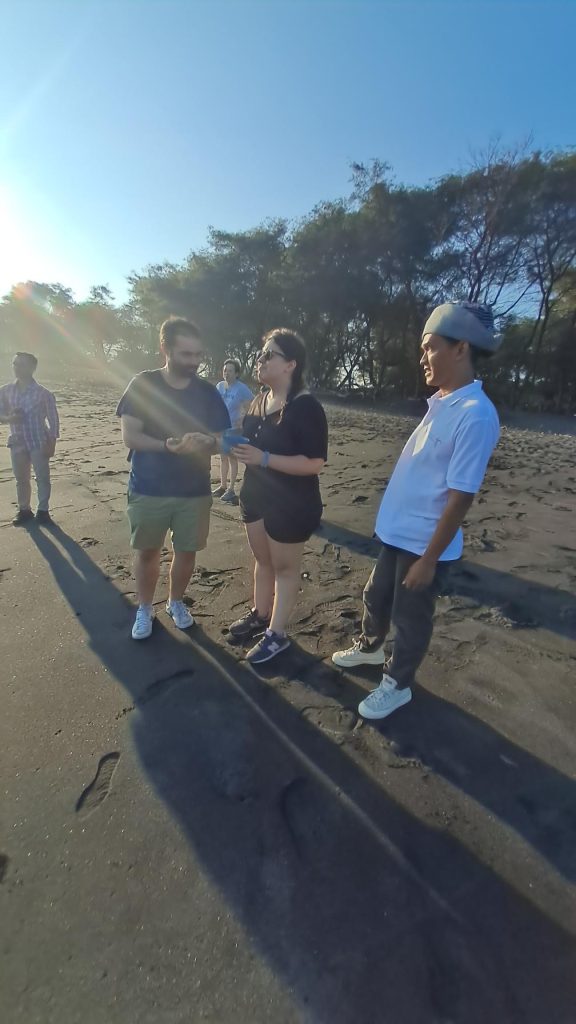
Fajar had a different passion. He was the guardian of the sea turtles, a silent protector of these ancient creatures that had been visiting the shores of Goa Cemara for centuries. Goa Cemara, a pristine beach in Bantul, was a nesting ground for several species of sea turtles. But these magnificent creatures were facing threats from pollution, habitat loss, and illegal poaching. Seeing the declining numbers of sea turtles year after year, Fajar felt a deep sense of responsibility. He knew he had to do something.
With the help of a few like minded villagers, Fajar started a community based conservation project. The group began by monitoring the beach for nesting turtles. They would carefully mark the nests, protect them from predators, and count the hatchlings as they made their way to the sea. Fajar was more than just a caretaker. Fajar was also an educator. He organized workshops and beach clean-ups to raise awareness about the importance of sea turtles and the threats they faced. He worked closely with local schools, teaching children about marine conservation and inspiring them to become the next generation of guardians.
Over the years, Fajar and his team have achieved remarkable success. Thanks to their tireless efforts, the sea turtle population at Goa Cemara has started to recover. More and more turtles are nesting on the beach, and the hatchlings are successfully reaching adulthood. Java travel blog had the pleasure of support the group who care about sea turtle.
Tradition Making Palm Sugar in Bantul

Gilangharjo, a small village nestled in the heart of Bantul, Yogyakarta, is renowned for rich agricultural heritage. One of most cherished traditions is the production of palm sugar, a dark, rich sweetener with a unique, smoky flavor. This time honored process has been passed down through generations, and remains an integral part of the local culture.
The journey of palm sugar begins at dawn. Skilled farmers climb tall coconut palms to collect the sweet sap, known as nira. Using traditional tools, they carefully tap the flower buds of the coconut palm, allowing the nira to drip into bamboo containers. This process must be done daily, as the nira ferments quickly.
Once collected, the nira is boiled in large, heavy bottomed pots over an open fire. As the water evaporates, the nira thickens and deepens in color. The process of boiling and reducing is a delicate one, requiring constant attention. The sugarmaker must stir the mixture continuously to prevent it from burning.
When the nira has reached the desired consistency, it is poured into molds made from coconut shells. These molds give the palm sugar distinctive shape. The molds are then left to cool and harden. Once set, the palm sugar is ready to be enjoyed.
Durian Disaster

As their tour guide in Indonesia, I was excited to introduce my guests, Maria and Carlos, to the unique flavors of our country. Food is a big part of Indonesian culture, and I was eager to share some of my favorites. One fruit that always sparks conversation is the durian. Known for distinctive, pungent smell and creamy, custard like texture, durian is a polarizing fruit that people either love or hate.
“So, Maria and Carlos,” I began, “have you heard of durian? It’s a very famous fruit here in Indonesia.”
Maria wrinkled her nose. “I’ve heard the smell is… intense,” she said, her eyes wide.
Carlos chuckled. “I’m up for trying anything once.”
We found a local fruit street market where we could purchase a durian. As I cut into the fruit, the sweet, yet strong, aroma filled the air. Maria and Carlos both covered their noses, but their curiosity got the better of them. With hesitant smiles, they took their first bites. Their expressions quickly changed from curiosity to surprise. Maria coughed slightly and Carlos made a face. “It’s… different,” Carlos said, trying to find the right words.
Maria nodded in agreement. “It’s very… strong.”
Despite their initial hesitation, Maria and Carlos were good sports about trying the durian. We continued our tour, and throughout the day, they would occasionally joke about the durian experience. Even though they didn’t become instant fans, they appreciated the opportunity to experience something so uniquely Indonesian. And that, in the end, is what java travel blog is all about. It’s about stepping outside of your comfort zone and trying new things. Even if you don’t love everything you try, the experiences you have along the way will make for unforgettable memories.
Oxcart Adventure with Java Travel Blog

Experience Rural Charm on a Traditional Oxcart.
Nestled in the heart of Yogyakarta, Indonesia, lies the charming village of Gilangharjo, Pandak, Bantul. Away from the bustling city, this idyllic locale offers a unique and nostalgic experience, a leisurely tour on a traditional oxcart.
The oxcart tour in Daleman Gilangharjo is more than just a ride, it’s a journey back in time. As you settle into the rustic wooden cart, pulled gently by a pair of sturdy oxen, you’ll be transported to a simpler era. The rhythmic clinking of the cart’s wooden wheels against the dirt road provides a soothing soundtrack as you pass through lush rice paddies and quaint villages.
A Sustainable and Authentic Experience
This eco-friendly mode of transportation offers a sustainable way to explore the local countryside. The tour is not only about seeing the sights but also about immersing oneself in the local culture. Friendly local guides will share stories and insights into the village’s history, traditions, and daily life.
Highlights of the Oxcart Tour
Scenic Countryside : Enjoy breathtaking views of rice paddies, coconut groves, and traditional Javanese houses.
Local Villages : Visit authentic villages and interact with friendly locals.
Traditional Crafts : Witness local artisans creating handcrafted products.
Culinary Delights : Savor delicious local snacks and beverages.
Best Time to Visit
The oxcart tour is available year-round, but the dry season (May to October) offers the most pleasant weather for outdoor activities.
To book your oxcart adventure, you can contact us as local tour operators or inquire at your accommodation. Many tour packages include a visit to local markets, traditional homes, or even a cooking class.
If you’re looking for a unique and unforgettable experience in Yogyakarta, an oxcart tour is a must-try. It’s a chance to slow down, appreciate the simple things in life, and connect with nature and local culture.
Rice Harvest with Java Travel Blog
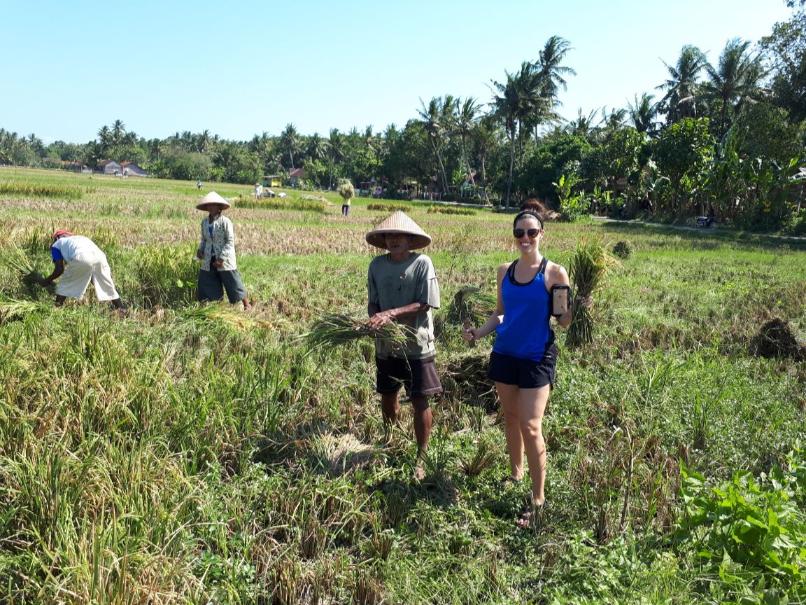
The sun beat down on my neck as java travel blog led my two guests, Alaina and Aaron, through the narrow path between the lush green paddy fields. The air was filled with the sweet scent of rice and the cheerful chirping of birds. Gilangharjo, a small village nestled in the heart of Bantul, Yogyakarta, was a world away from the bustling city. Today, we were not just tourists, but farmers for a day.
We arrived at Pak Suhar field, a local farmer who had graciously agreed to let us experience the traditional way of life. After a brief introduction and a demonstration of the proper way to hold a sickle, we were ready to begin. With a hearty laugh, Pak Suhar handed us each a sickle and said, “Ayo, kita mulai!” [ Come on, let’s start! ].
The first few minutes were a bit awkward as we fumbled with the sickles, trying to cut the rice stalks without injuring ourselves. But with Pak Suhar’s patient guidance, we soon got the hang of it. The rhythmic motion of cutting the rice was surprisingly satisfying, and as we worked.
After lunch, we helped to bundle the cut rice into small sheaves and then carry them to the edge of the field. As the sun began to set, we gathered around Pak Suhar, exhausted but happy. He thanked us for our help and presented us with small gifts of locally made handicrafts.
As we walked back to Java travel blog basecamp, we couldn’t help but feel grateful for this unique experience. It was more than just a tourist activity, it was a chance to connect with the local community and gain a deeper appreciation for the hard work that goes into producing our food.
Javanese Gamelan and Tourism

Javanese gamelan is a traditional Indonesian musical ensemble composed of various pitched percussion instruments, such as gongs, metallophones, and xylophones. This unique orchestra, native to the island of Java, has a rich history and cultural significance that has captivated both locals and foreign visitors alike. The unique and captivating nature of Javanese gamelan has made it a popular attraction for tourists visiting Indonesia.
Cultural Performances : Gamelan performances are frequently featured at cultural events, festivals, and tourist attractions, giving visitors a glimpse into Javanese heritage.
Learning Opportunities : Many gamelan communities offer workshops and lessons for those interested in learning to play these traditional instruments.
Fusion Music : Gamelan music has inspired a new generation of musicians who blend traditional sounds with contemporary genres, creating a fresh and exciting musical experience.
Tourism Destinations Certain regions in Java, such as Yogyakarta and Surakarta, are known for their rich gamelan traditions and attract music enthusiasts from around the word.
By Java travel blog leveraging the allure of Javanese gamelan, Indonesia can further enhance for cultural tourism offerings and attract visitors seeking authentic and enriching experiences.