



 Mail Me
City Tour Borobudur start in the morning after breakfast starigh to Borobudur Temple, Mendut and Pawon Temple then see the local attracrion like making brown sugar, pottery and batik painting. After finish explore Borobudur area then drive to bukit rhema or Chicken church. Then back to hotel in Yogyakarta, by city tour Borobudur
City Tour Borobudur, Temples Nearby
To get to city tour Borobudur Temple, there are several routes that can be taken, via Sendang Sono route and via Muntilan city. The Muntilan route is the main route from Yogyakarta to Magelang and city tour Borobudur Temple. Meanwhile, the Sendang Sono route is an alternative route that passes through beautiful views and quieter than the main route through the city of Muntilan. With good preparation, your trip to the temple with city tour Borobudur will be an unforgettable experience.
The sun began to creep up, shining on the green Menoreh hills. The cool morning air greeted our arrival. Today, City tour Borobudur will start a spiritual adventure to Borobudur Temple, one of the wonders of the world, via the unusual route of Sendang Sono.
City Tour Borobudur route
After breakfast at the accommodation in Yogyakarta, we started driving north. The winding road took us past terrace rice fields and traditional villages. sometime, we will stop to capture the stunning natural beauty. City tour Borobudur also introduce to all the tourist about story of the rice field grow.
The calm and peaceful atmosphere immediately felt so calming. Sendang Sono is a pilgrimage complex known as a holy place for Catholics in Indonesia.
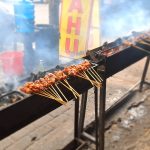
The journey to city tour Borobudur via the Sendang Sono route is not just an ordinary tourist attraction, but also a deep spiritual experience. Along the Sendang Sono route there are also many local restaurants, starting from goat satay, chicken satay, soto, pecel, and the special one is mangut beyong. Around the Sendang Sono route there is the legendary mangut beyong stall which is always busy with buyers. we decide try what the legendary mangut beyong tastes like, story by city tour Borobudur.
Mendut Temple and Pawon Temple
Mendut temple and Pawon Temple are usually visited by tourist before or after visiting city tour Borobudur temple, because the are located very close to city tour Borobudur temple. This two temples is a Buddhist temple build in the 9th century. city tour Borobudur temple, Mendut Temple, and Pawon Temple form a straight line geographically, which symbolizes the binding unity of Buddhist temple during ritual ceremonies.this is how city tour Borobudur area.
Traditional Process for Making Javanese Sugar
This place where Javanese sugar is made is close to the city tour Borobudur temple area. It’s only about 2 km away. A local villager makes Javanese sugar to sell around city tour Borobudur temple or outside the city.Javanese sugar, with its distinctive sweet taste, has become an inseparable part of Indonesian culinary delights. The manufacturing process, which is still carried out traditionally. has high historical and cultural value. Let’s explore the steps for making this meaningful Javanese sugar, by city tour Borobudur.
1. Cutting coconut flower
Palm Tree: The main ingredient in Javanese sugar is sap which comes from palm trees. A mature palm tree will produce flowers containing this sweet liquid.
Penderes: The job of tapping sap is called “nderes”. Penderes will climb the palm tree with agility and use special tools to make incisions in the palm flower.
Storage: The sap that comes out of the incision is then collected in a bamboo container or other place.
2. Drying Nira
Boiling: The sap that has been collected is then boiled in a large pan. The boiling process is carried out over medium heat so that the sap does not burn.
Stirring: During the boiling process, the sap is continuously stirred so that it doesn’t clump and cooks evenly.
Water Reduction: The main purpose of boiling is to reduce the water content in the sap so that the sap. Becomes thicker and eventually crystallizes into palm sugar.
3. Printing
Mold: After the sap thickens, the thick liquid is poured into the mold. The molds commonly used are molds made from bamboo or coconut shells.
Cooling: Java sugar that is still hot is then cooled until it hardens. And is ready to be removed from the mold.
This traditional process of making Javanese sugar. Produces sugar with a distinctive taste and is more natural than factory-produced sugar. Apart from that, making Javanese sugar also preserves local wisdom and provides added value to rural communities, by city tour Borobudur.
Traditional Ways of Making Pottery
The same as making Javanese sugar. Making pottery is also close to city tour Borobudur Temple, only about 3 km from the temple. This village is very famous for its traditional manufacturing methods. Pottery, or ceramics, is one of the oldest forms of arts and crafts that still survives today. The manufacturing process, which is full of the touch of human hands and the use of natural ingredients. Has become a tradition passed down from generation to generation in many cultures. Let’s explore more deeply the traditional way of making pottery. City tour Borobudur will help you with all you needs.
Pottery Ingredients
Clay: The main ingredient in making pottery is clay. Good clay has a high level of plasticity, so it is easy to shape.
Water: Water is used to work the clay so that it has a suitable consistency for shaping.
Fire: Fire is used in the firing process to turn wet clay into hard, durable ceramics.
Steps for Making Pottery
Clay Processing:
Clay that is still coarse is processed by grinding it and mixing it with water until it reaches the desired consistency. This processing process is done manually by kneading or using simple tools such as a mortar.
Formation:
Graining technique: The clay is shaped in stages by reducing it little by little using tools such as a spatula. This technique allows the creation of various complex shapes.
Twist technique: Clay is formed into small twists which are then arranged and compacted into the desired shape.
Wheel technique: This technique utilizes a rotating wheel to shape the clay into a symmetrical shape.
Drying:
After being shaped, the pottery is dried slowly in a shady and well ventilated place. Drying too quickly can cause cracking.
First Burn:
Dry pottery is fired at a temperature that is not too high. This burning aims to remove water content and strengthen the pottery structure.
Finishing:
After the first firing, the pottery can be decorated using various techniques such as carving, painting, or coating it with glaze.
Second Burn:
Pottery that has been decorated is then fired again at a higher temperature. This second firing aims to melt the glaze and produce a shiny surface
City Tour Borobudur – How To Make Batik Painting
The location of the gallery is not far from city tour Borobudur temple. Batik painting is an interesting combination of painting and batik traditions. This technique allows artists to explore their creativity using fabric and natural dyes. If you are interested in trying to make batik paintings, here are the basic steps you can follow, by city tour Borobudur.
Tools and Materials Required
Mori : White mori cloth or cotton is a common choice because the fibers are good at absorbing color.
Canting: A tool for applying wax to mori
Wax: Material for making patterns on cloth.
Natural or synthetic: Color choices are very diverse, ranging from natural colors such as indigo, soga, to synthetic color.
Brushes: Various brush sizes for applying colors.
Hot water: To dissolve color and clean tools.
Frying Pan: To heat the evening.
Stove: A heat source for heating a frying pan.
Sketch: Drawing of the design to be made on mori
Steps to Make Batik Painting
Sketching:
Sketch the desired design on the mori cloth using a pencil or marker that is easy to erase.
Applying wax:
Heat overnight until liquid.
Dip the canting into the liquid wax, then apply it to the part of the cloth you don’t want to dye.
Let it dry overnight before moving on to the next step.
Coloring:
Dip the brush into the dye solution, then apply it to the part of the cloth that is not covered by wax.
Repeat this step for each desired color.
wax droop:
Once all the color is applied, boil the cloth in hot water to dissolve the wax. Gently rub the areas where there is still wax using a soft brush.Rinse the cloth until clean.
drying under the sun :Hang the cloth until dry. For more durable results, the cloth can be fixed by ironing at medium temperature.
City Tour Borobudur pick up location, drop off location and departure time.
Pick up : Hotel in Yogyakarta area, Borobudur area or the location we have agreed upon.
Drop off location : Hotel in Yogyakarta area, Borobudur are or the location we have agreed upon
Departure time : 8 am.
Tips for the best experience
Book Borobudur ticket in advance.
Tour Inclusions :
Comfortable transportation with air conditioning.
English-speaking driver.
Parking fee.
Mineral water.
Tour Exclusions :
Entrance ticket
Flight ticket
Personal expenses
Accommodation
Meals
The city tour Borobudur packages also available for custom itinerary, we are open to receiving input from you. Where is to find tourist driver on the city tour Borobudur ? kejawa.com is the solution, we provide transportation with experienced drivers who know English and if you need a guide, we are ready to help. Enjoy your trip and God Bless You.
Pingback: Borobudur Cycling Adventure - Kejawa
Pingback: Batik Painting - Kejawa
Pingback: Javanese Sugar - Kejawa
Pingback: Mendut Temple - Kejawa
Pingback: Pawon Temple - Kejawa
Pingback: Borobudur Temple - Kejawa
Pingback: Java Temple Trip - Kejawa
Pingback: Java Temple Tour - Kejawa
Pingback: Borobudur Driver - Kejawa